
BCDVA Best-corrected distance visual acuity
89%20/20 or better
 Important Safety Information
Bausch + Lomb Home
Important Safety Information
Bausch + Lomb Home


A real-world single-surgeon case series of eyes with mild corneal astigmatism (mean 0.78D) implanted with the 1.25 D enVista Aspire Toric
Show Case Details

Low levels of corneal astigmatism are common, but the lowest available toric powers have historically left a treatment gap. The question is whether the lowest-power enVista Aspire Toric can deliver a meaningful refractive result in these eyes.
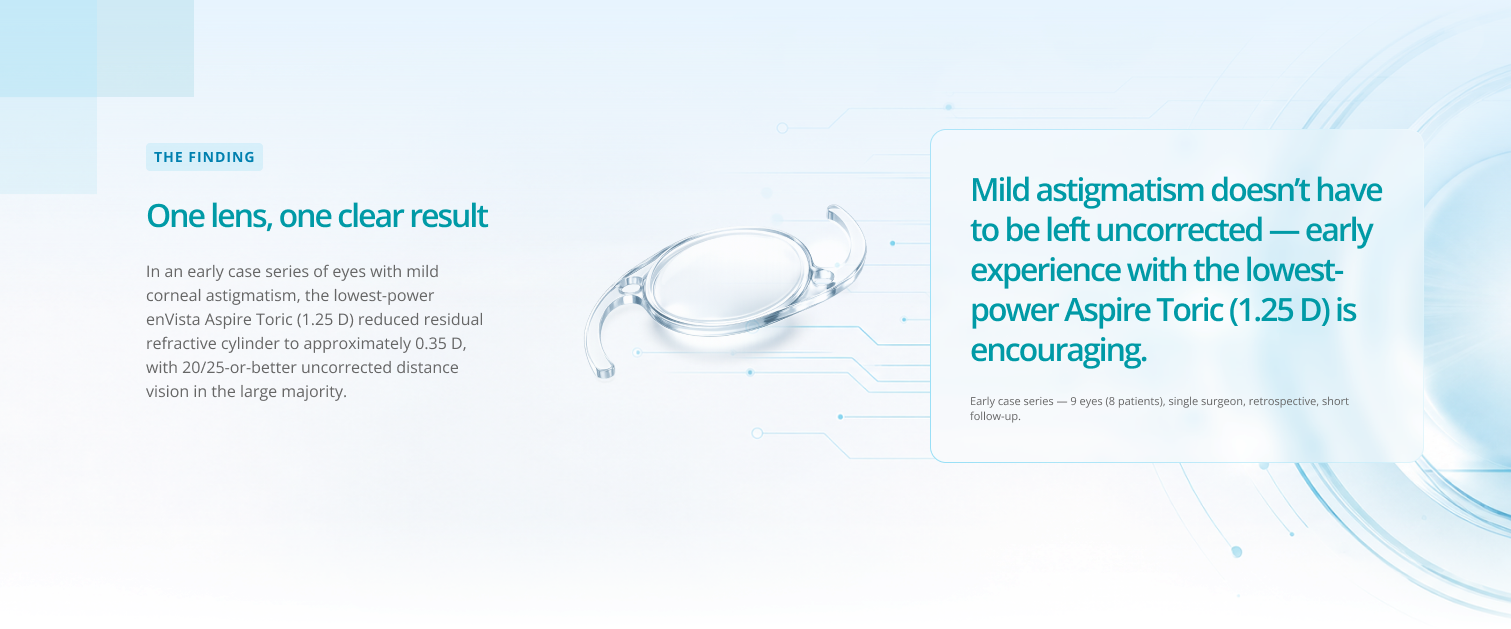
In an early case series of eyes with mild corneal astigmatism, the lowest-power enVista Aspire Toric (1.25 D) reduced residual refractive cylinder to approximately 0.35 D, with 20/25-or-better uncorrected distance vision in the large majority.
Early case series — 9 eyes (8 patients), single surgeon, retrospective, short follow-up.
Stephenson case series · All eyes implanted with the 1.25 D enVista Aspire Toric
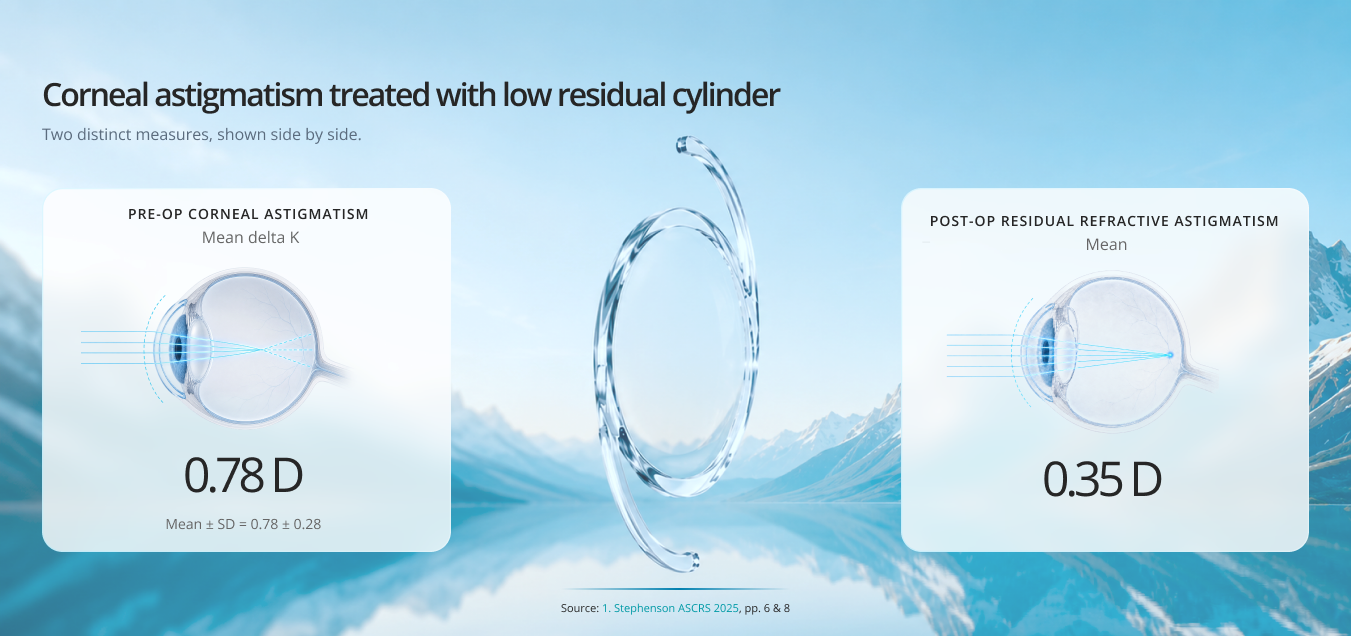
Two distinct measures, shown side by side.
Source: 1. Stephenson ASCRS 2025, pp. 6 & 8
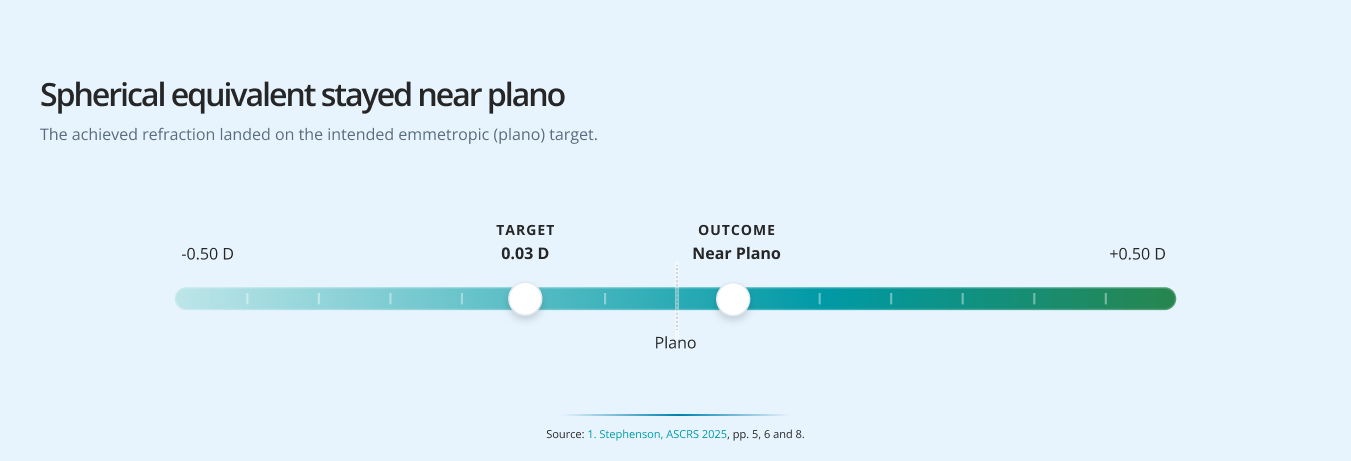
The achieved refraction landed on the intended emmetropic (plano) target.
Source: 1. Stephenson, ASCRS 2025, p. 8
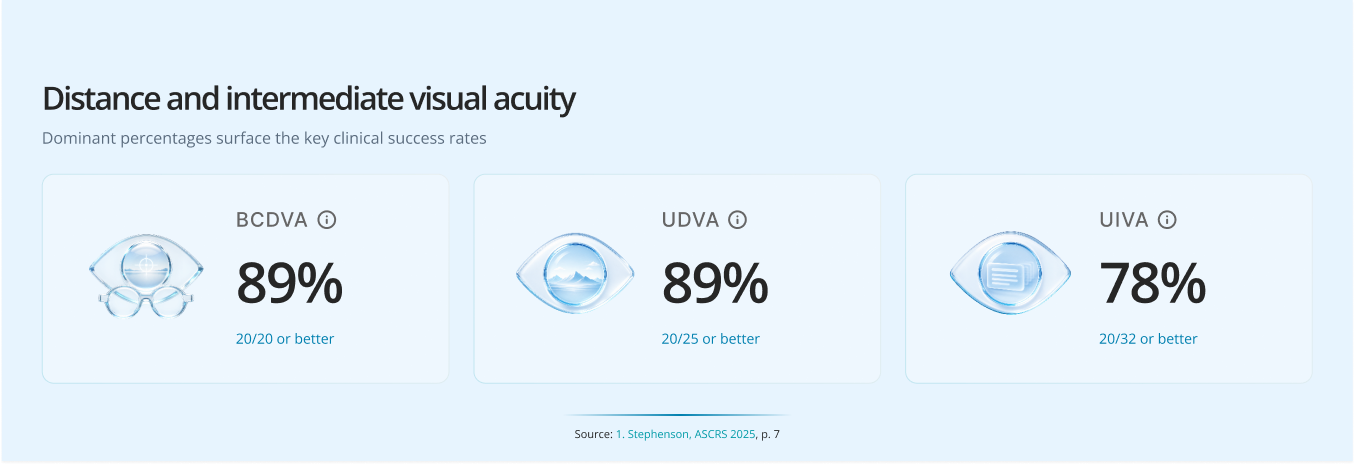
Dominant percentages surface the key clinical success rates
20/20 or better

20/25 or better

20/32 or better
Source: 1. Stephenson, ASCRS 2025, p. 7
A prospective, multi-centre real-world analysis of 30 ETA eyes reported a mean residual refractive cylinder of −0.30 ± 0.26 D. No lenses required repositioning during follow-up.
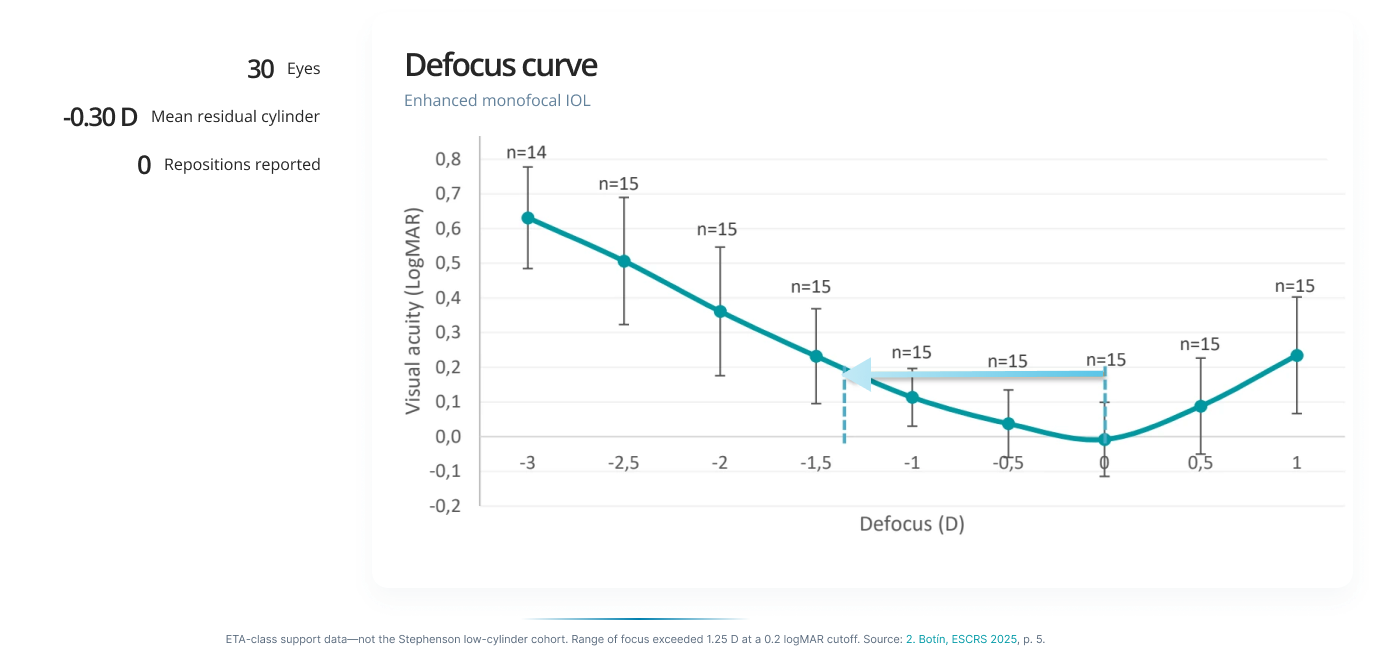
Enhanced monofocal IOL
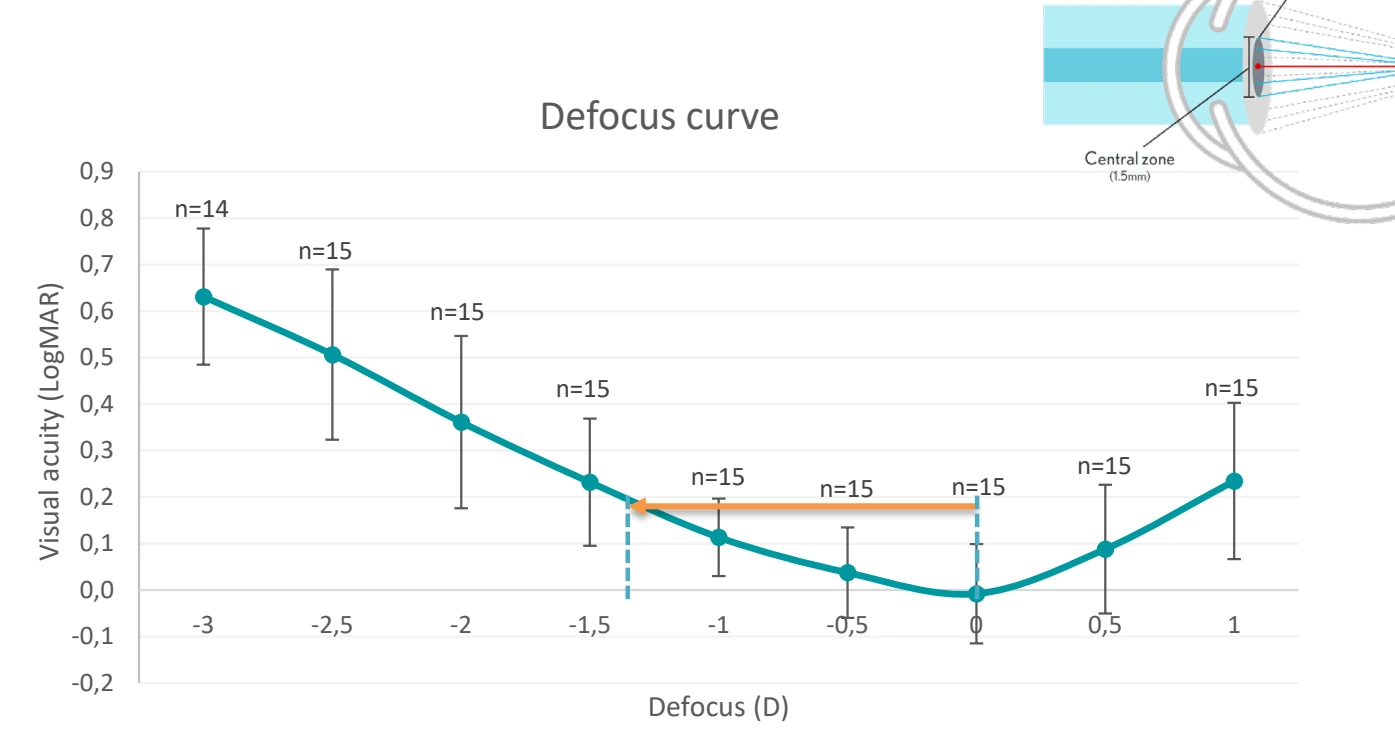
ETA-class support data—not the Stephenson low-cylinder cohort. Range of focus exceeded 1.25 D at a 0.2 logMAR cutoff. Source: 2. Botín, ESCRS 2025, p. 5.
 Download Case Series PDF
Get the full Stephenson presentation, including the residual-cylinder and visual-acuity data above.
 Download Case Series PDF
 Contact us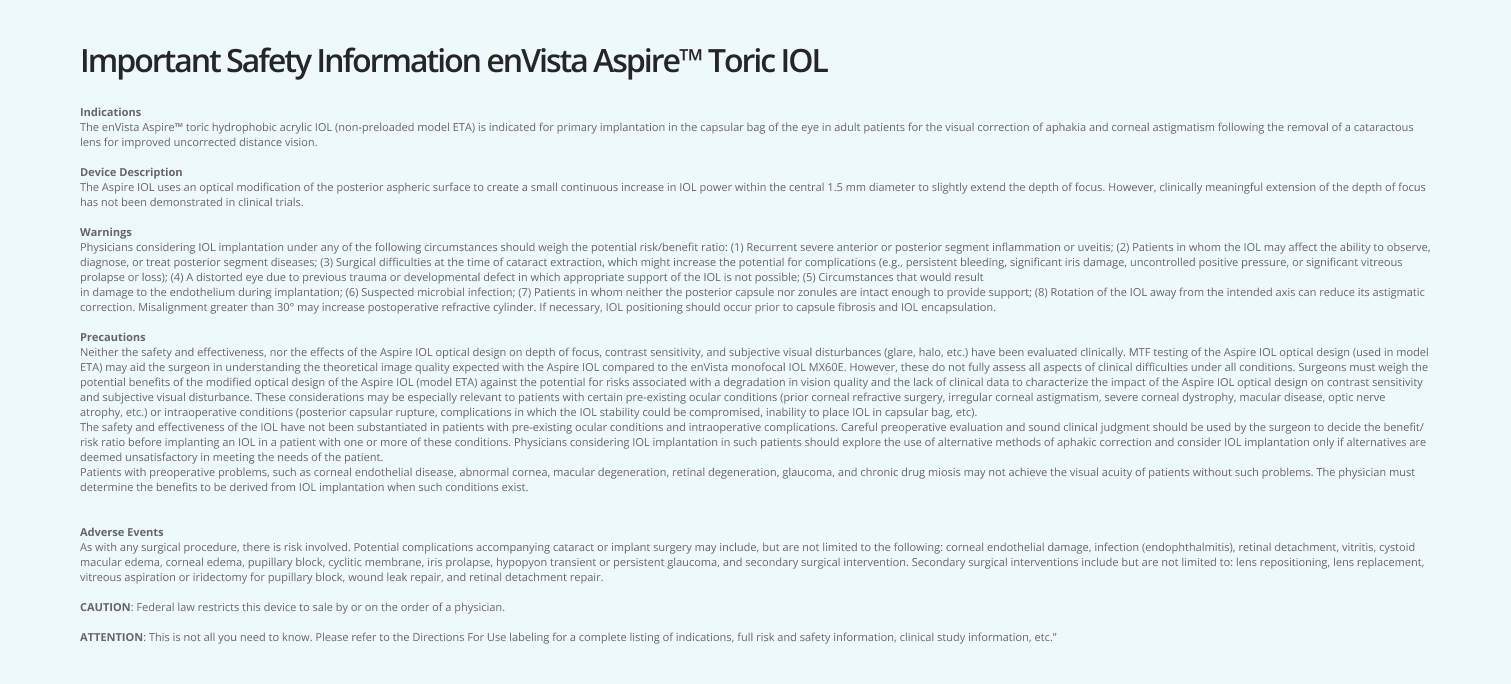
Indications The enVista Aspire™ toric hydrophobic acrylic IOL (non-preloaded model ETA) is indicated for primary implantation in the capsular bag of the eye in adult patients for the visual correction of aphakia and corneal astigmatism following the removal of a cataractous lens for improved uncorrected distance vision.
Device Description The Aspire IOL uses an optical modification of the posterior aspheric surface to create a small continuous increase in IOL power within the central 1.5 mm diameter to slightly extend the depth of focus. However, clinically meaningful extension of the depth of focus has not been demonstrated in clinical trials.
Warnings Physicians considering IOL implantation under any of the following circumstances should weigh the potential risk/benefit ratio: recurrent severe inflammation or uveitis; conditions affecting observation or treatment of posterior segment disease; surgical difficulties increasing complications; inadequate support; endothelial risk; suspected infection; insufficient capsule or zonules; and IOL rotation away from the intended axis. Misalignment greater than 30° may increase postoperative refractive cylinder.
Precautions Neither the safety and effectiveness, nor the effects of the Aspire IOL optical design on depth of focus, contrast sensitivity, and subjective visual disturbances have been evaluated clinically. Careful preoperative evaluation and sound clinical judgment should be used to determine the benefit/risk ratio.
Adverse Events Potential complications may include corneal endothelial damage, infection, retinal detachment, vitritis, cystoid macular edema, corneal edema, pupillary block, cyclitic membrane, iris prolapse, hypopyon, glaucoma, and secondary surgical intervention.
CAUTION: Federal law restricts this device to sale by or on the order of a physician. ATTENTION: This is not all you need to know. Please refer to the Directions For Use labeling for a complete listing of indications, full risk and safety information, clinical study information, etc.

1. Stephenson D. Retrospective Case Series of Patients Implanted with a Low-Powered Toric Monofocal IOL with an Enhanced Optic. ASCRS 2025, Presented 110177.
2. Mingo Botín D, et al. Visual Outcomes and Rotational Stability Following Implantation of a New Partial Range of Field Toric Enhanced IOL. ESCRS 2025.
Dee Stephenson, MD, reported research, consulting, advisory and speaking relationships, including Bausch + Lomb and Zeiss. Medical writing support was provided by Panacea 85 Ltd, funded by Bausch + Lomb.
David Mingo Botín, MD, reported no relevant conflicts of interest in the supplied ESCRS presentation.